



How deep to bury underground wiring
Table 300.5(A) sets minimum burial depth by wiring method and location. In general, direct-burial cable needs 24 in. of cover, PVC conduit 18 in., and rigid metal conduit 6 in.; a residential 120 V, 20 A GFCI circuit may be 12 in.
What the code requires
Depth, called cover, is measured from the top of the cable or raceway to finished grade. In a general location the minimums are: 24 in. for direct-burial cable; 6 in. for rigid or intermediate metal conduit; 18 in. for EMT, nonmetallic raceway listed for direct burial such as PVC, or other approved raceway; 12 in. for a residential branch circuit of 120 V or less with GFCI protection and a 20 A maximum; and 6 in. for irrigation and landscape lighting circuits of 30 V or less.
In a trench below 2 in. of concrete, the minimums are 18 in. for direct-burial cable, 6 in. for rigid or intermediate metal conduit, 12 in. for EMT, PVC and other approved raceway, and 6 in. for the residential GFCI and landscape circuits. Under an exterior slab at least 4 in. thick, with no vehicle traffic and the slab extending 6 in. beyond the run, direct-burial cable needs 18 in., metal conduit, EMT, PVC or other raceway 4 in., and the residential GFCI and landscape circuits 6 in., or 4 in. in raceway.
Under streets, driveways and parking lots, every method needs 24 in., and in or under airport runways, including adjacent areas where trespassing is prohibited, 18 in. Under one- and two-family dwelling driveways and parking areas, the minimum is 18 in., except 12 in. for the residential GFCI circuit. Under a building, wiring in a raceway or in identified MC or MI cable needs no cover. Where solid rock prevents the required depth, wiring must be in a metal raceway or a nonmetallic raceway permitted for direct burial, covered by at least 2 in. of concrete extending down to the rock. Direct-buried EMT must also meet 358.10.
Buried service conductors at 18 in. or deeper that are not encased in concrete need a warning ribbon at least 12 in. above them. For the landscape lighting column, a listed low-voltage lighting system may be shallower if its instructions allow, and pool, spa or fountain lighting of 30 V or less in nonmetallic raceway may be at 6 in. where it is part of a listed low-voltage lighting system.
On the job
- In a general location, the 12 in. depth works only when the circuit is residential, 120 V or less, GFCI protected and 20 A maximum. If any one of those is missing, the deeper depth for the wiring method applies.
- PVC at 12 in. in a general location is a common fail unless the circuit qualifies for the residential GFCI column. Otherwise it needs 18 in.
- A missing warning ribbon over buried underground service conductors is another frequent correction.
- Line-voltage underground circuits are work for a licensed electrician. Your building department can tell you what permit and inspections apply.
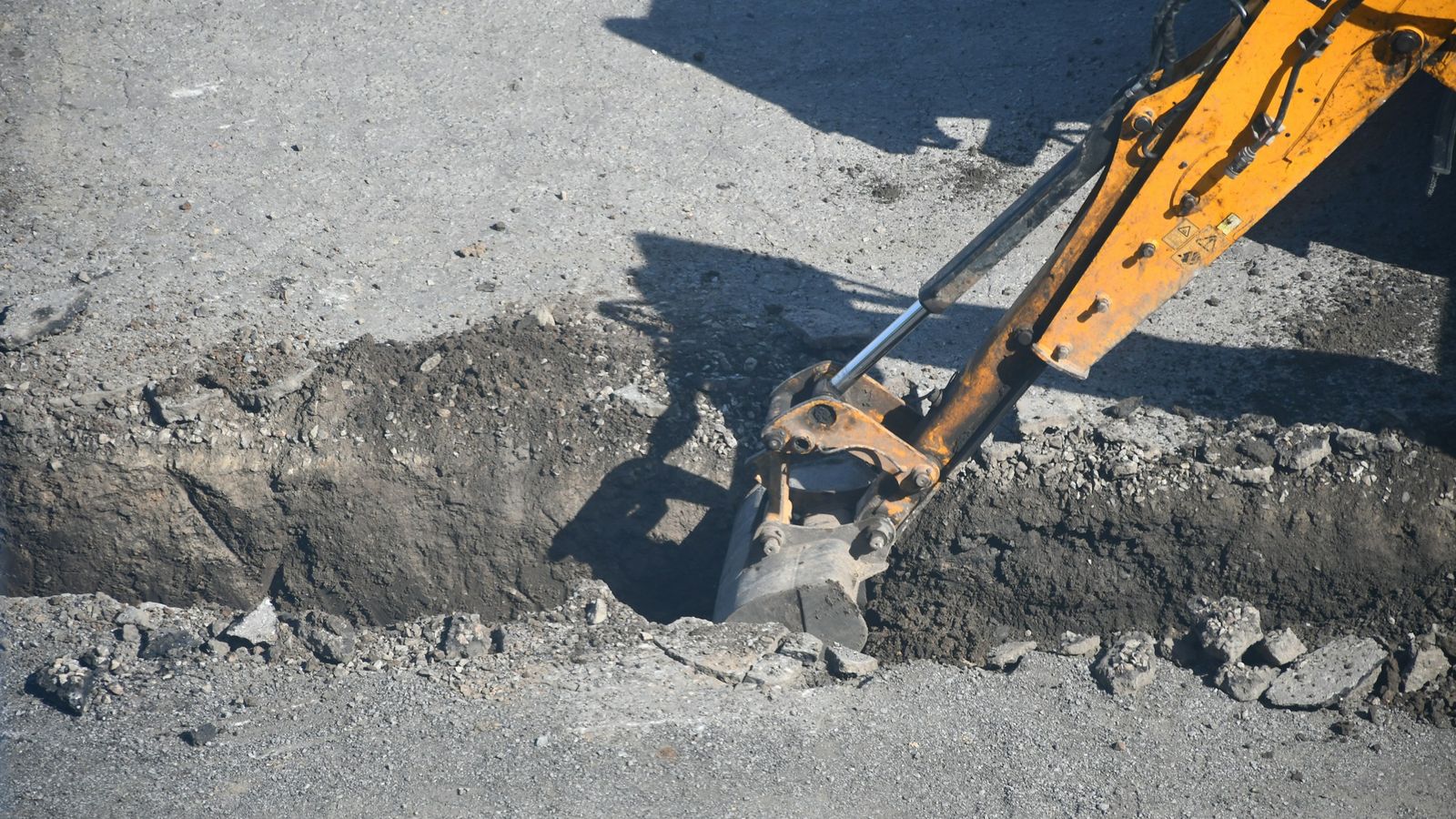
Exceptions that matter
- Where a general wiring method, such as direct-burial cable, metal conduit or PVC, carries a circuit that qualifies for the residential GFCI or low-voltage landscape column, the shallowest applicable depth is permitted.
What changed in 2023
The 2023 edition renamed the table Table 300.5(A), added 1500 V dc to its voltage range (now 0 to 1000 V ac, 1500 V dc), and extended the 300.5(D) protection rules to conductors and cables generally, not only direct-buried ones. It also added EMT to the raceway column (18 in. in a general location), with direct-buried EMT required to meet 358.10.
Related sections
- NEC 300.15: When a junction box is required
- NEC 305.15
- NEC 358.10
Where this comes from
Send a photo. Get a real answer.
Text is fastest. If you smell something burning or see smoke, call 911 first and keep away from the panel.
Kyle Robert Anderson KBC Electric · CSLB #1073066 · C-10 Electrical · Licensed since 2021