



Protecting cables from nails and screws
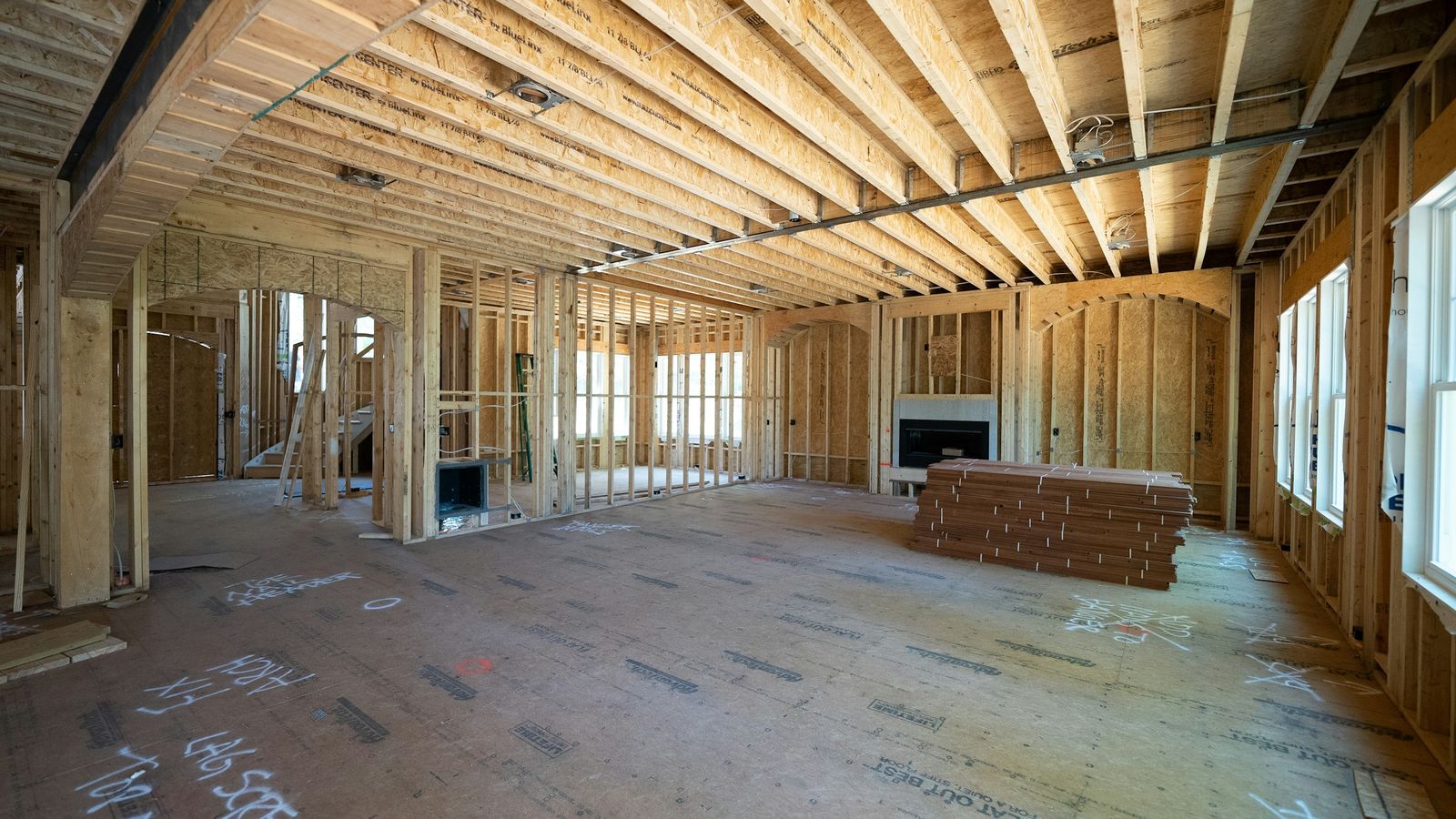
Cables through holes in wood framing need the hole edge at least 1¼ in. from the edges of the wood, or a steel plate or bushing at least 1/16 in. thick covering the wiring.
What the code requires
Wiring through bored holes in wood framing must be placed so the edge of the hole is at least 1¼ in. from the edges of the wood member. If it cannot be, a steel plate or bushing at least 1/16 in. thick must cover the wiring. Where wiring sits in a notch in the wood, a steel plate at least 1/16 in. thick is required, installed before the wall or ceiling finish.
Wiring in a shallow groove needs a steel plate or sleeve at least 1/16 in. thick, or at least 1¼ in. of free space, for its full length.
Under metal-corrugated roof decking, the code requires at least 1½ in. between the lowest surface of the deck and the top of any cable, raceway or box. Wiring may not be concealed inside the decking.
Where raceways carry conductors of 4 AWG or larger into an enclosure, the conductors must be protected by a smoothly rounded insulating or listed metal fitting, secured insulating material, or a threaded hub. That protection goes in before the conductors are pulled, and an insulating bushing may not be used to secure the raceway.
On the job
- Missing nail plates where holes are closer than 1¼ in. to the edge of a stud or joist are a common correction.
- Cable or MC run tight against the underside of a metal roof deck is a frequent fail.
Exceptions that matter
- Steel plates are not required for rigid metal conduit, intermediate metal conduit, PVC, RTRC or EMT.
- Listed and marked plates thinner than 1/16 in. are allowed if they give equal protection.
- The roof-deck spacing does not apply to rigid or intermediate metal conduit with listed steel or malleable-iron fittings and boxes, or to decking covered by 2 in. of concrete.
What changed in 2023
The 2023 edition made the 1¼ in. setback apply from every edge of the wood member, not just the nearest edge, and in the bored-hole exception replaced the old rigid nonmetallic conduit wording with rigid PVC conduit and RTRC.
Related sections
- NEC 300.4(D)
- NEC 314.17
- NEC 334.15: Protecting exposed NM cable
- NEC 334.17
Where this comes from
Send a photo. Get a real answer.
Text is fastest. If you smell something burning or see smoke, call 911 first and keep away from the panel.
Kyle Robert Anderson KBC Electric · CSLB #1073066 · C-10 Electrical · Licensed since 2021